
Digital Technology in the Not-For-Profit Sector
Download the 11th Annual Digital Technology in the Not-For-Profit Sector Report now
2026 Digital Technology in the Not-for-Profit Sector Report
The highly anticipated 2026 Digital Technology in the Not-for-Profit Sector report is here, built from insights shared by 966 NFPs across data, cyber, digital transformation and AI.
While this year's report shows evidence that our sector has made significant progress in adopting tools and infrastructure, it shows where challenges and risks continue to grow, and how there's much more to do to achieve further improvements.
Thank you to the 966 organisations that participated in this survey. Your contributions help us further advocate for digital upscaling of the sector.
Download the report to uncover:
- What’s really happening with AI adoption and use cases.
- Whether cyber capability is improving amid rising threats.
- The biggest challenges facing NFPs.
- How NFPs are building data capability for better outcomes.
- How NFPs are leveraging digital marketing for fundraising and engagement.
See also:
- Technology resources for the sector – a comprehensive collection of AI, privacy and security policy templates, webinar recordings, self-paced learning courses, guides, data toolkits, NFP technology discounts, access to our AI Not-For-Profit Learning Community and more. Read now >
- Read Our Community's comprehensive coverage of this year's report: Institute of Community Directors Australia
A huge thank you to the 966 organisations across Australia and New Zealand that contributed to this year's research, helping us understand how technology is being used across the sector, the progress being made and the challenges organisations face in creating greater impact.
Now in its 11th year, the report reveals a sector embracing technology while facing growing pressure on resources, skills and funding.
Some of the key findings:
- AI adoption is accelerating, but governance needs to catch up. 82% of not-for-profits now use generative AI, yet only 28% have an AI policy or guideline in place.
- Cyber security is improving, but training remains a gap. 53% now use multi-factor authentication across all internet-facing systems holding sensitive information, but only 23% regularly train staff and volunteers.
- We're improving the way we collect data, but there's more to do to turn it into impact. 48% of organisations have essential data capability, yet just 25% use data to inform how they design and deliver services.
- Digital capability is growing, but planning is falling behind. 56% now have essential digital capability, up from 37% over 3 years, yet half still operate without an IT plan.
Most concerningly, nearly 1 in 2 organisations say technology challenges limit their ability to reach new, underserved or urgent community needs.
At today's launch, we were joined by the Hon Dr Andrew Leigh MP, Adya Goswami from the National AI Centre, Josephine Khalil from Paul Ramsay Foundation, Andrew Richards from Volunteering Australia, and Infoxchange's David Spriggs and Sophie Souchon.
Our discussion explored how technology can help a resource-constrained sector make better decisions, improve productivity and deliver greater impact.
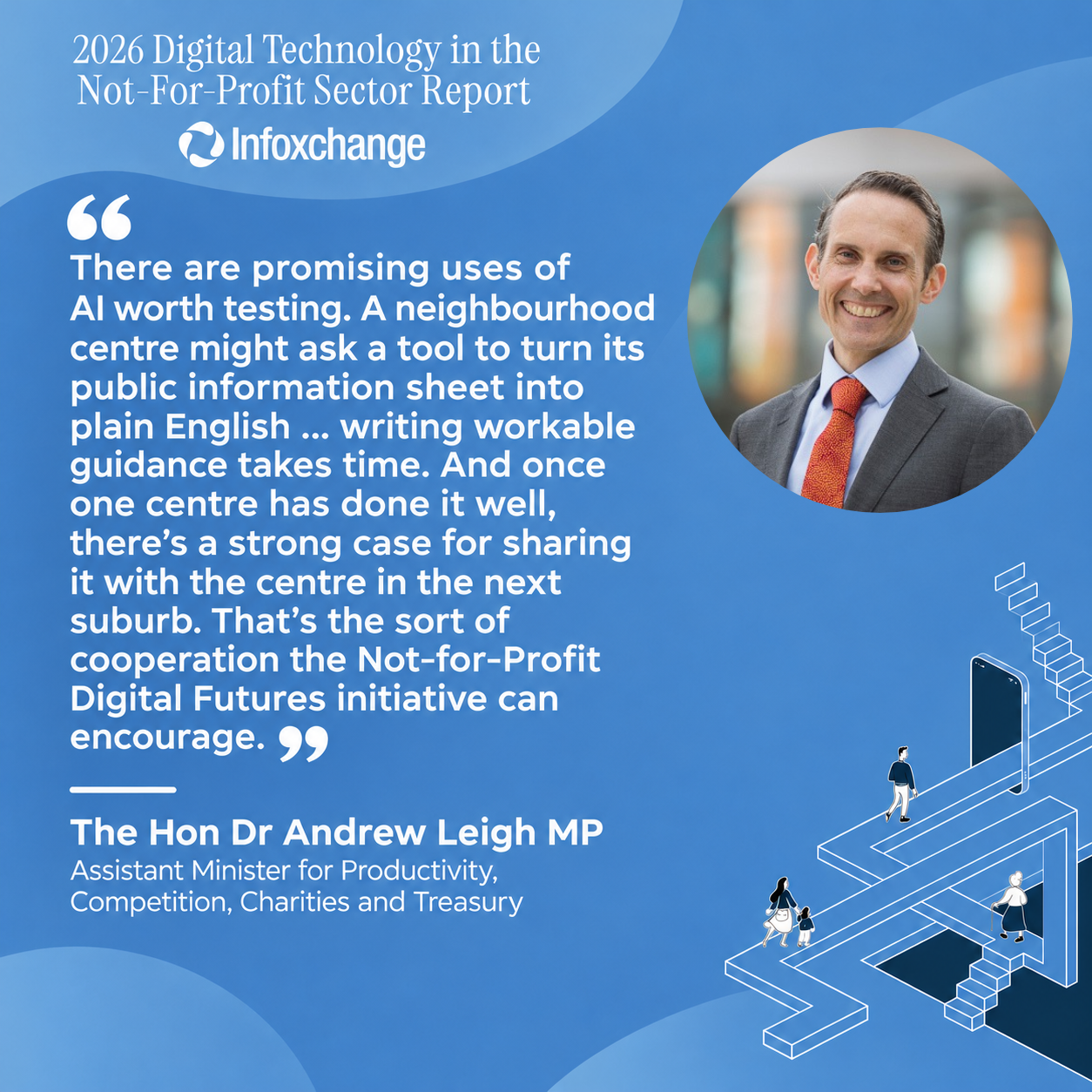
Thank you to The Hon Dr Andrew Leigh MP, Assistant Minister for Productivity, Competition, Charities and Treasury who encouraged organisations to identify which administrative tasks take up the most time each week and explore how technology could reduce that burden, and the importance of sharing skills, suggesting those with technology expertise should sit alongside someone who could benefit from key knowledge.
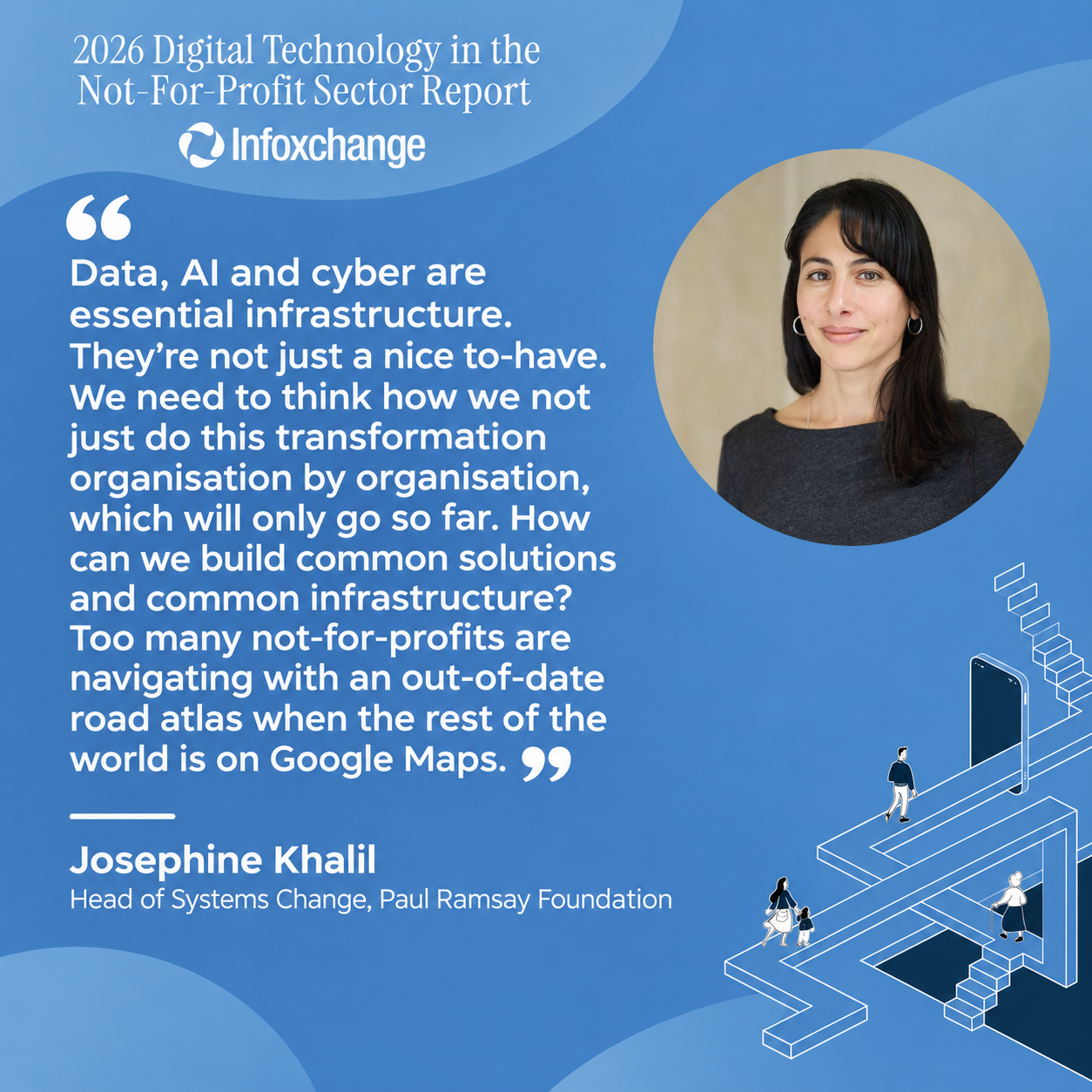
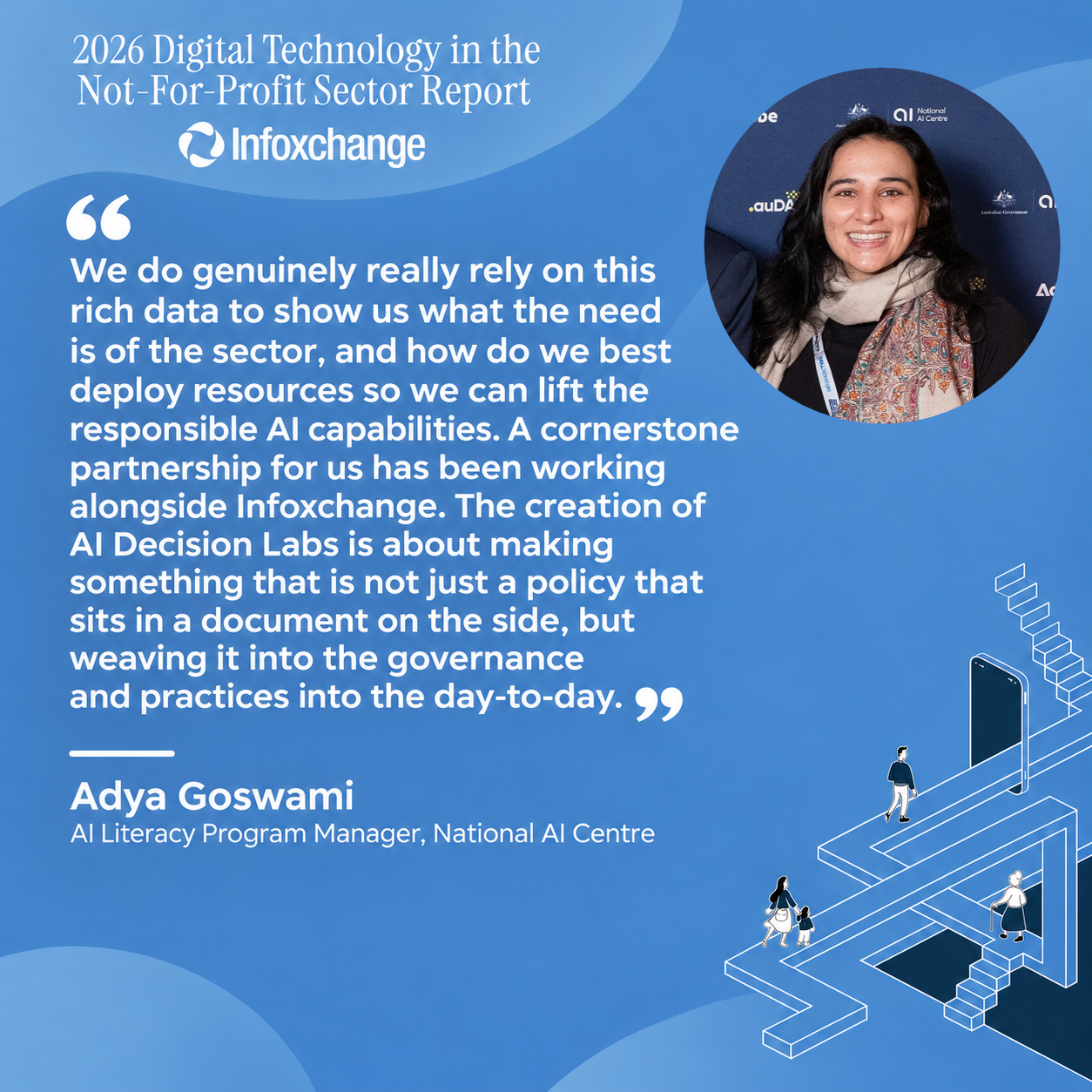
The Paul Ramsay Foundation's Head of Systems Change Josephine Khalil highlighted the opportunity and need to equip frontline workers with better evidence to provide the right support at the right time, before people reach crisis point. AI Literacy Program Manager at the National AI Centre Adya Goswami emphasised practical, responsible AI adoption and how bringing together the strengths of different sectors can help overcome resource constraints.
And Volunteering Australia's Operations and Communications Director Andrew Richards reminded us of technology's potential to transform volunteering, from micro-volunteering opportunities that fit people's circumstances to better matching skills and contributions with community needs.
Thank you to the Infoxchange team behind this year's research and analysis, and to everyone who joined from across government, the corporate sector and the not-for-profit community.
What our sector leaders are saying about the survey report:
 2026 report
2025 report
2024 report
2023 report
2022 report
Infoxchange reception
+61 3 9418 7400