

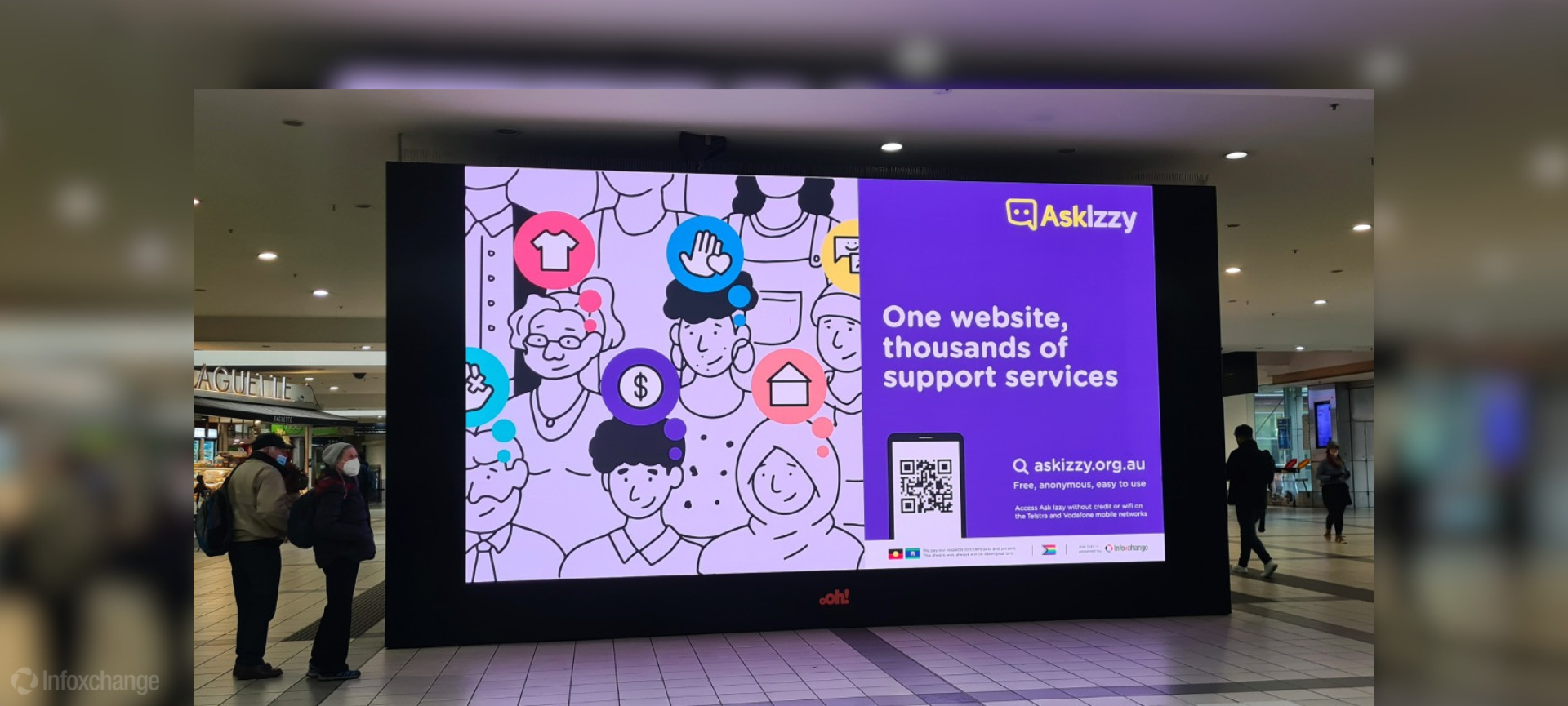
Impact story: Ask Izzy putting purpose, people and safeguards first
How Ask Izzy is working with the University of NSW and its Chief Scientist to explore AI and the Ask Izzy support experience.
With support from Google.org, Infoxchange has been working with the University of NSW (UNSW) and its Chief Scientist, Professor Toby Walsh, to explore how AI can improve the experience of people seeking support through Ask Izzy.
The collaboration reflects a shared focus across technology companies, academics and NFPs to create measurable social benefit by exploring machine learning applications.
A fundamental challenge is that help-seekers often face overlapping, complex circumstances and may not know exactly what to search for. Someone escaping family violence, for example, may search for crisis accommodation without knowing that services could also help them access a phone, children’s items or other essentials they were forced to leave behind.
A more responsive prototype
The project is exploring how machine learning can improve the recommendation of services based on patterns in previous searches, identifying services that people in similar circumstances have found useful and surfacing these more prominently, rather than a typical search recommendation of the most clicked link rising to the top.
From prototype to proof of concept
The algorithmic prototype developed with UNSW is the first step. The next stage will see Infoxchange build a working proof of concept within Ask Izzy itself, allowing the approach to be tested in a real-world setting.
Central to this stage is the voice of lived experience. Members of Infoxchange’s Community Advisory Group – people with direct experience of seeking support – will test the solution and provide feedback on whether recommendations are genuinely relevant and helpful, and whether any unintended bias emerges.
Building guardrails for safer technology
While the potential can be significant, so are the responsibilities – people using Ask Izzy often find themselves in highly vulnerable circumstances, making privacy, fairness and bias critical design considerations.
As Professor Walsh shared, “historical data can reflect existing biases in society and the institutions through which it was generated. So, we are examining data carefully, understanding where searches originate – a query entered directly by someone seeking help may differ from one entered on behalf of an organisation. These differences can influence the patterns an algorithm learns.”
Insights from this testing will directly shape the guardrails built into the solution – ensuring recommendations remain free from bias, and that the technology actively supports, rather than puts at risk, the most vulnerable members of the community.
“We are really happy to be working with the Infoxchange team on this project. This partnership is an important opportunity to be able to utilise AI expertise and deploy it to a sector where we can genuinely measure the social value and its outcomes.”