

Technology for Social Justice Conference 2026 Wrap-up Blog: Collaboration is the Only Way Forward
The 2026 Technology for Social Justice Conference brought together senior leaders from across the not-for-profit, government, philanthropy and technology sectors to explore one central question: how can safeguarded technology better serve people, communities and social impact?
Across three days of keynotes, panels, lightning talks, workshops and hands-on demos, it was widely acknowledged that digital capability is essential infrastructure, and we can do more when we collaborate together.
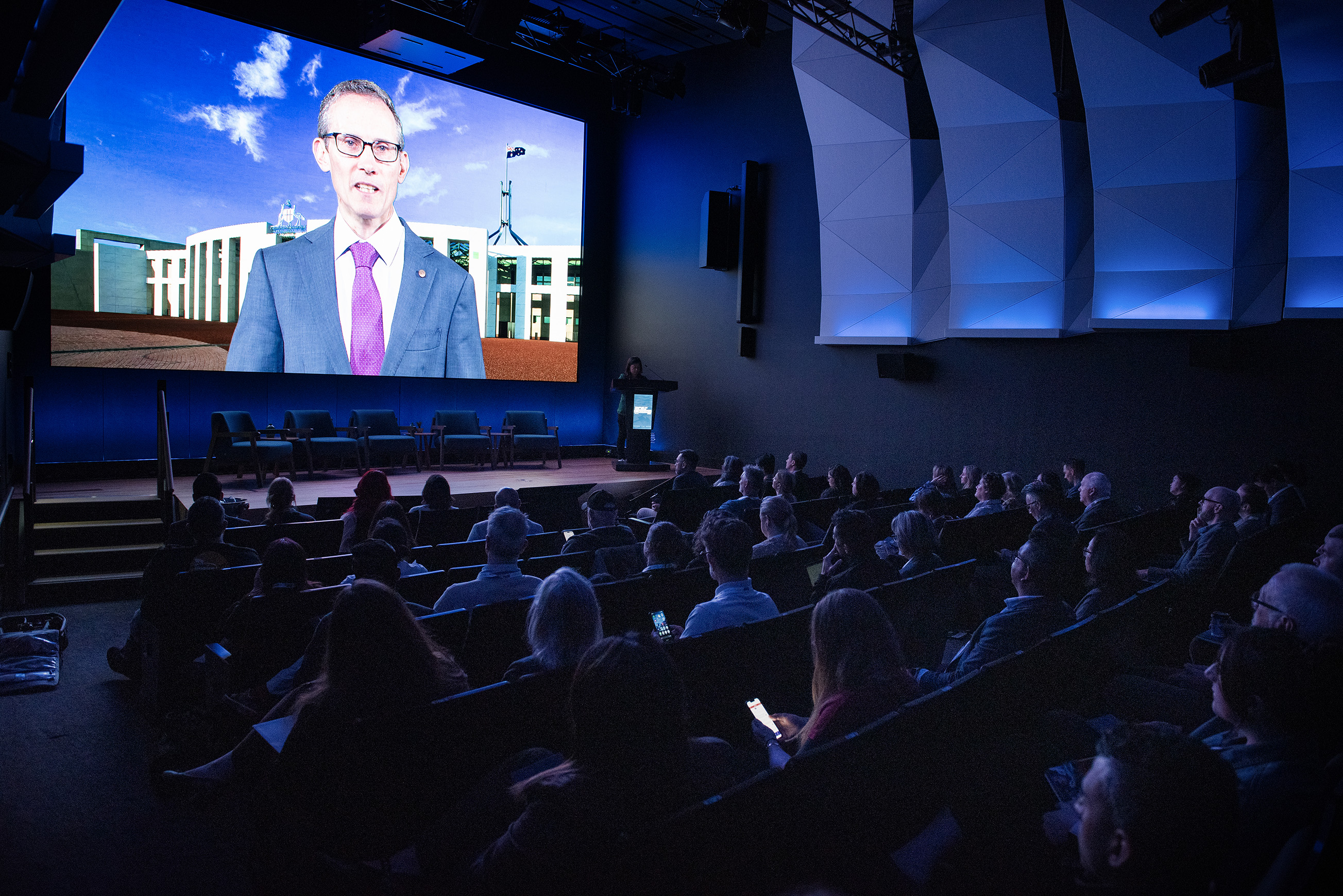
Day 1 opened with a video address from Andrew Leigh, followed by the official announcement of NFP Digital Futures by Infoxchange CEO David Spriggs – a national, sector-led initiative, bringing together philanthropy, government, NFP organisations, peak bodies, and industry partners to strengthen digital capability across Australia’s NFP sector. Read Andrew Leigh's speech here.
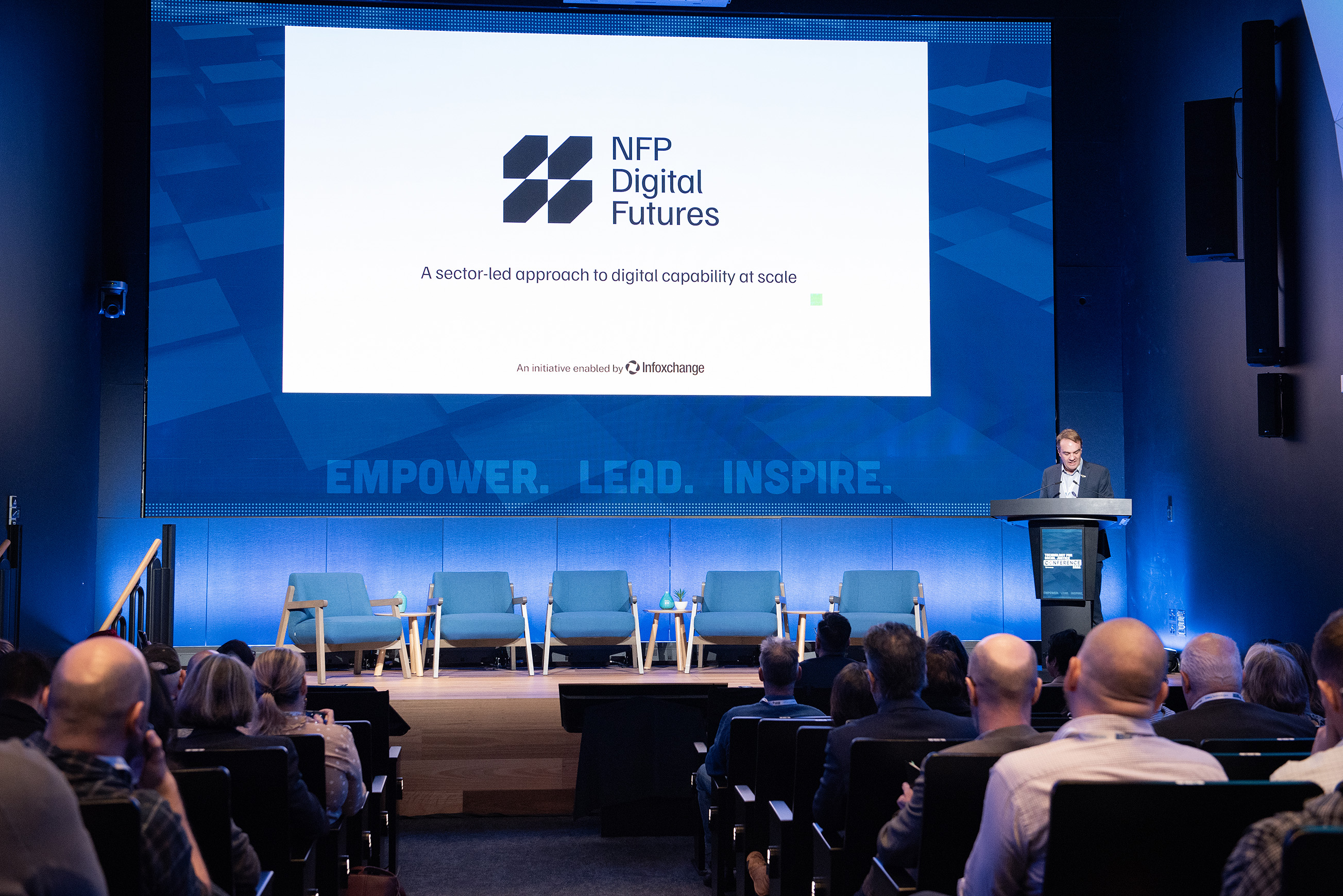
As David shared, ‘the communities we serve and a lot of our organisations risk being left behind. This is in an environment where we know we are all overwhelmed by the level of service demand. A collective approach now is really the only way forward, shaped by the sector for the sector. At the centre of this, is a very simple condition, that digital capability for us is no longer optional. It's absolutely essential infrastructure for our sector.”
The initiative is backed by more than 30 organisations across the NFP, government, philanthropy and industry sectors, including Infoxchange, National AI Centre, Microsoft, ARC Centre of Excellence for Automated Decision-Making and Society, PwC, Melbourne Social Equity Institute, Community Council for Australia, Australian Charities and Not-for-profits Commission, Social Ventures Australia, The Smith Family, Alannah & Madeline Foundation, Justice Connect, Greater Melbourne Foundation, Paul Ramsay Foundation, The Ian Potter Foundation, Minderoo Foundation, Gandel Foundation and Okta.
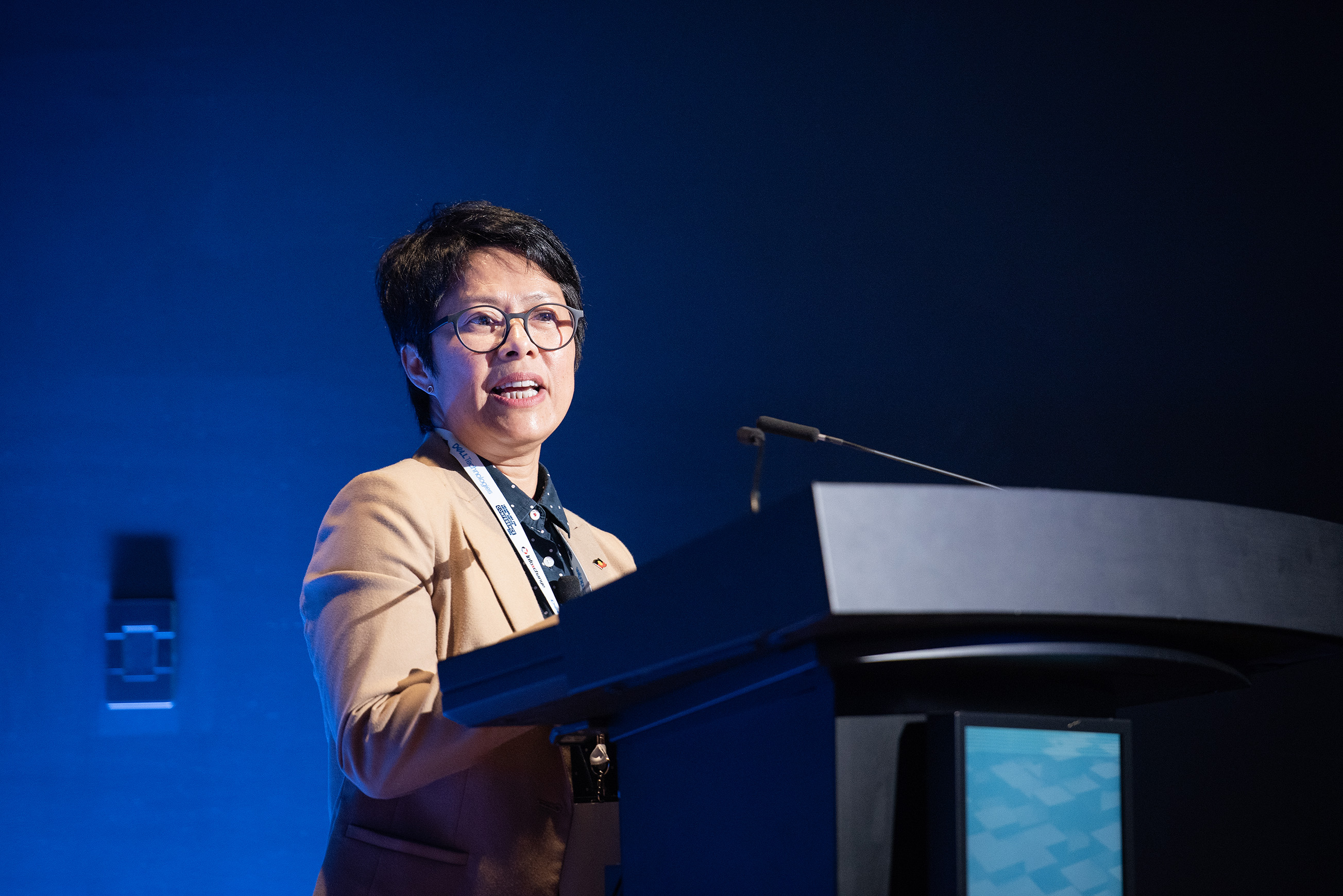
In the opening keynote, Seeing the Person: Human Leadership in a Fractured and Tech-Powered World, delivered by Hang Vo, CEO of Sacred Heart Mission and President of ACOSS, Hang called on the sector to recognise its distinctive role in shaping technology:
“Our superpower is our ability to see and understand people as people, in all their dimensions, fully and completely, and to act from their understanding with care, attention, and accountability. Our responsibility is to use that superpower intentionally with technology, not simply to adopt it, but to shape it, and to ensure that those human needs uphold human dignity and human rights.”
The opening panel continued this theme, exploring what it takes to build digital capability across sectors. Speakers included Hang Vo, Tish Tambaku, Yasmin Narielvala, Tim Allen and Dr Brett Szmajda who highlighted that collaboration requires far more than bringing people into the same room. It requires shared purpose, trust and the time to build together from the start.
Yasmin Narielvala from Paul Ramsay Foundation framed the importance of anchoring collaboration in shared purpose:
“Everybody will come with different perspectives, but what is our ultimate goal? What is the purpose of this initiative? What is the thing that is the core of this that we really need to hold onto? That is how we improve services for the beneficiaries and how we increase the capability of our staff to do that.”
The conference then moved into practical examples of how technology is already being shaped and deployed across the sector.
In a lightning talk on emerging cyber security threats, Urvashi Kathuria from Okta reminded attendees that cyber security must be grounded in behaviour and culture.
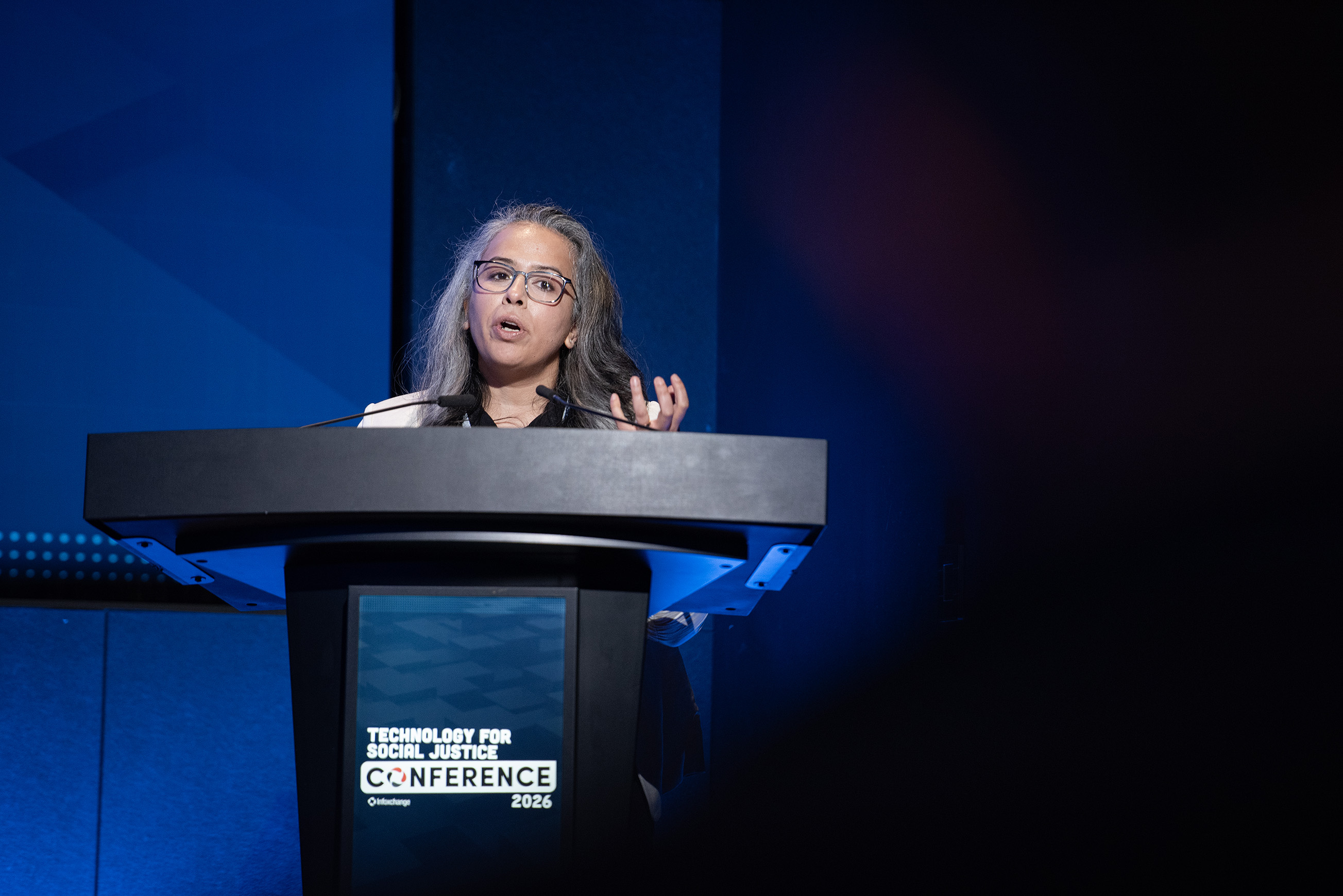
“Focus on real behaviour first. When your volunteers and staff understand that protecting their digital identity everywhere protects your mission directly, security transforms from an IT chore into a shared core value.”
She also challenged organisations to consider how they respond to AI:
“One, you do nothing. You let fear win. You continue to deliver the exact same impact that you always have. But you fail to take the advantage of an AI opportunity to scale your mission and close the resource gap. Two, you go fast without any control. That means you let your staff adopt AI wildly, perhaps risk a major breach, potentially violate a grant compliance. and ultimately lose the trust from the community.”
The third path, she argued, is to go fast with control.
“The bottom line means to really grasp the pace of advancement, view AI, not as a frightening challenge, but as a fighting opportunity.”
Jowe Esguerra from Uniting NSW.ACT shared the development of Buddy, Uniting’s first GenAI tool, and emphasised the importance of trust, governance and front-line co-design.
“Trust doesn't start when you release a solution,” recommending, “don’t be shy of investing in management and training. You need to equip people with the right training to uplift not just their digital literacy, but also the AI interest. Be quick to address any concerns about AI.”
Her closing message was direct:
“Trust matters, trust matters, trust matters.”
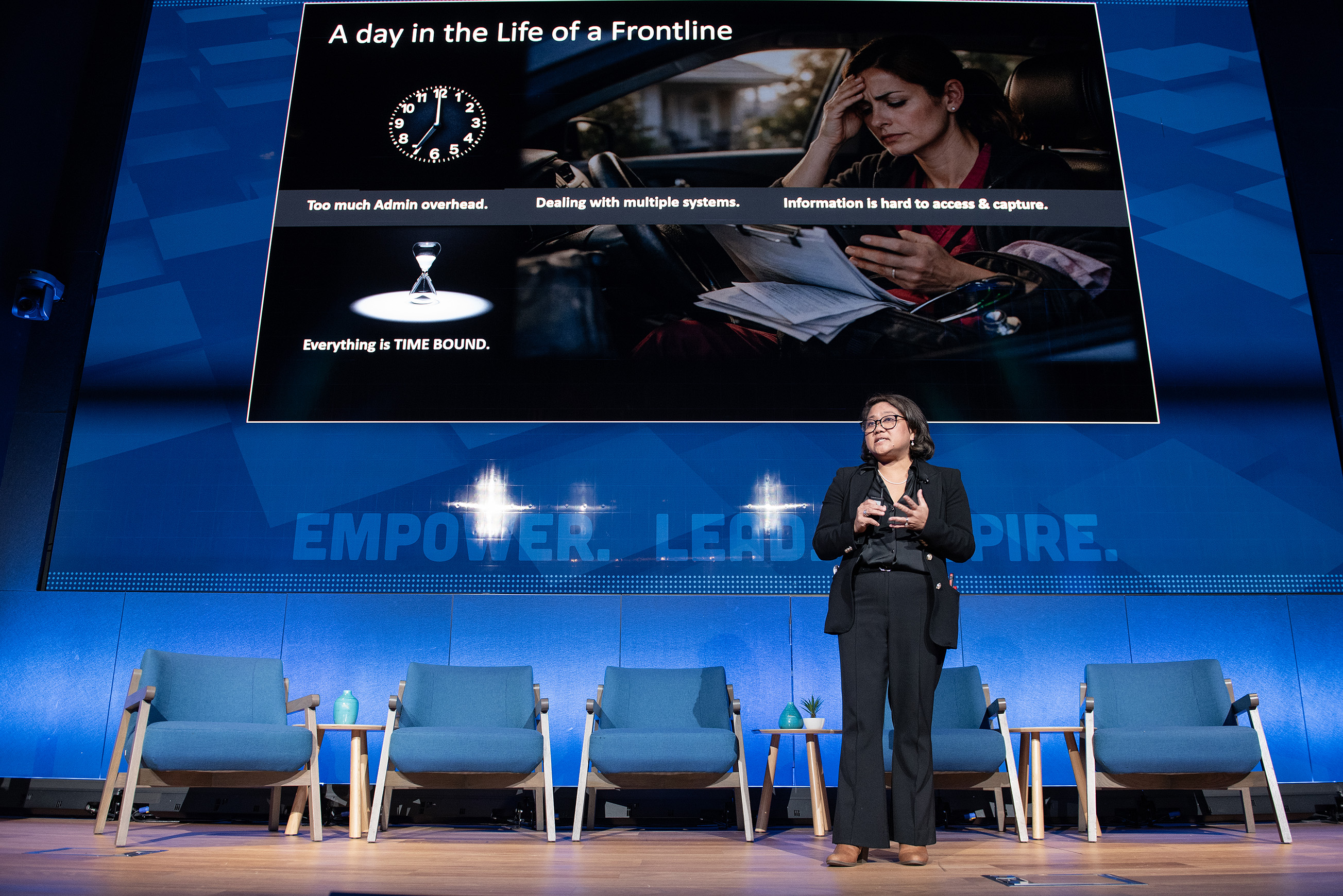
Dheeren Velu from Capgemini argued that the NFP sector cannot wait to be invited into critical technological conversations.
“The not-for-profit sector, in my opinion, must be at the table right from the beginning, not at the end, not as an afterthought. Not consulted once the architecture is set or the design is created, not invited to comment, but right from the beginning.“
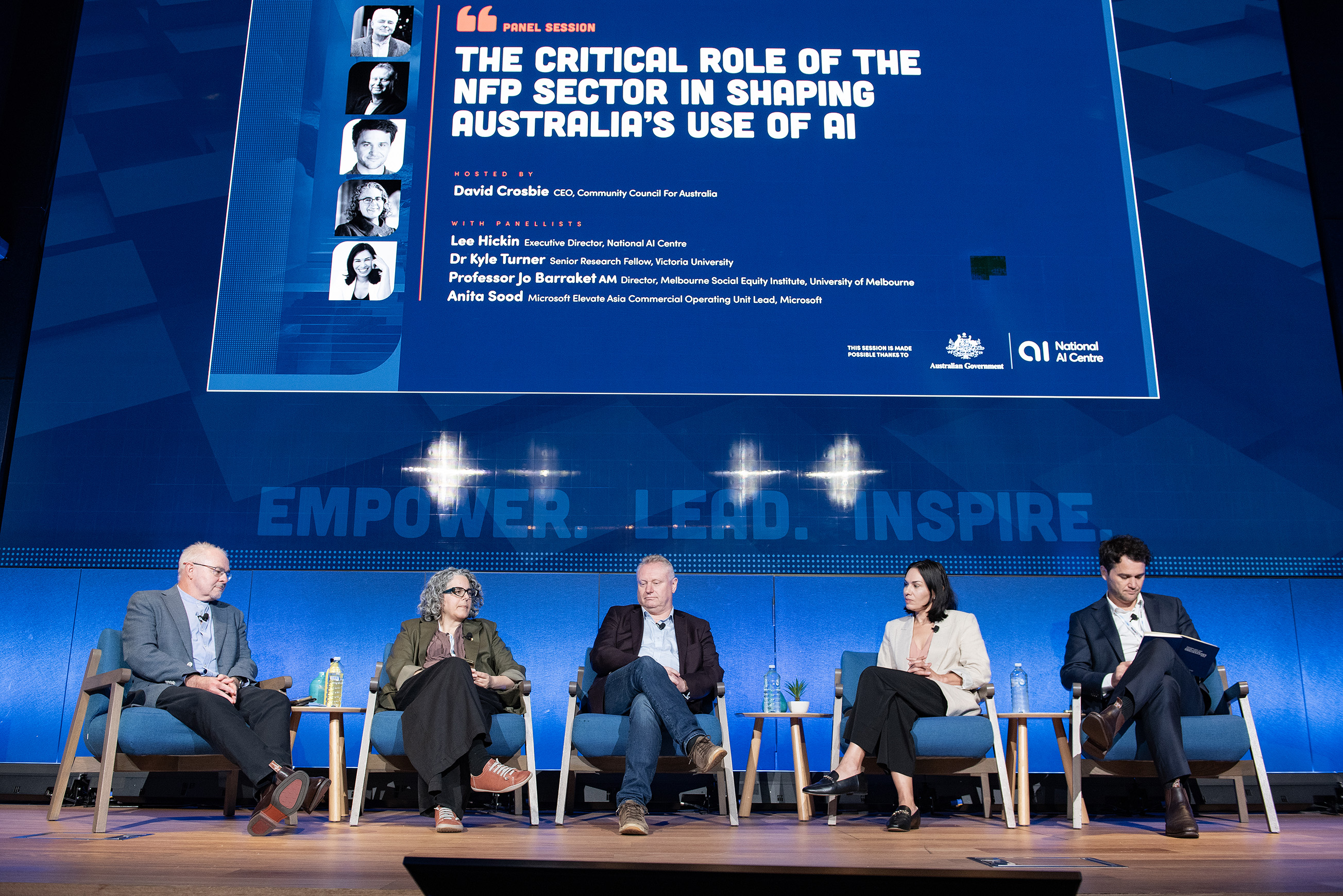
The panel The Critical Role of the NFP Sector in Shaping Australia's Use of AI brought together the National AI Centre’s Lee Hickin, CCA’s David Crosbie, PRF’s Dr Kyle Turner, the University of Melbourne’s Professor Jo Barraket and Microsoft’s Anita Sood. Professor Jo Barraket reflected that, “even without using AI, talking about the AI is helping us internally,” adding that: “it does actually help us have deep conversations about what good ethical practice looks like. How is this consistent with our values? Are we actually building things that are useful to others?”
Dr Kyle Turner highlighted examples of Indigenous-led technology pilots in endangered species management and fire management, where “problems that were decided by that community and full control over the data. They have the right to withdraw.”
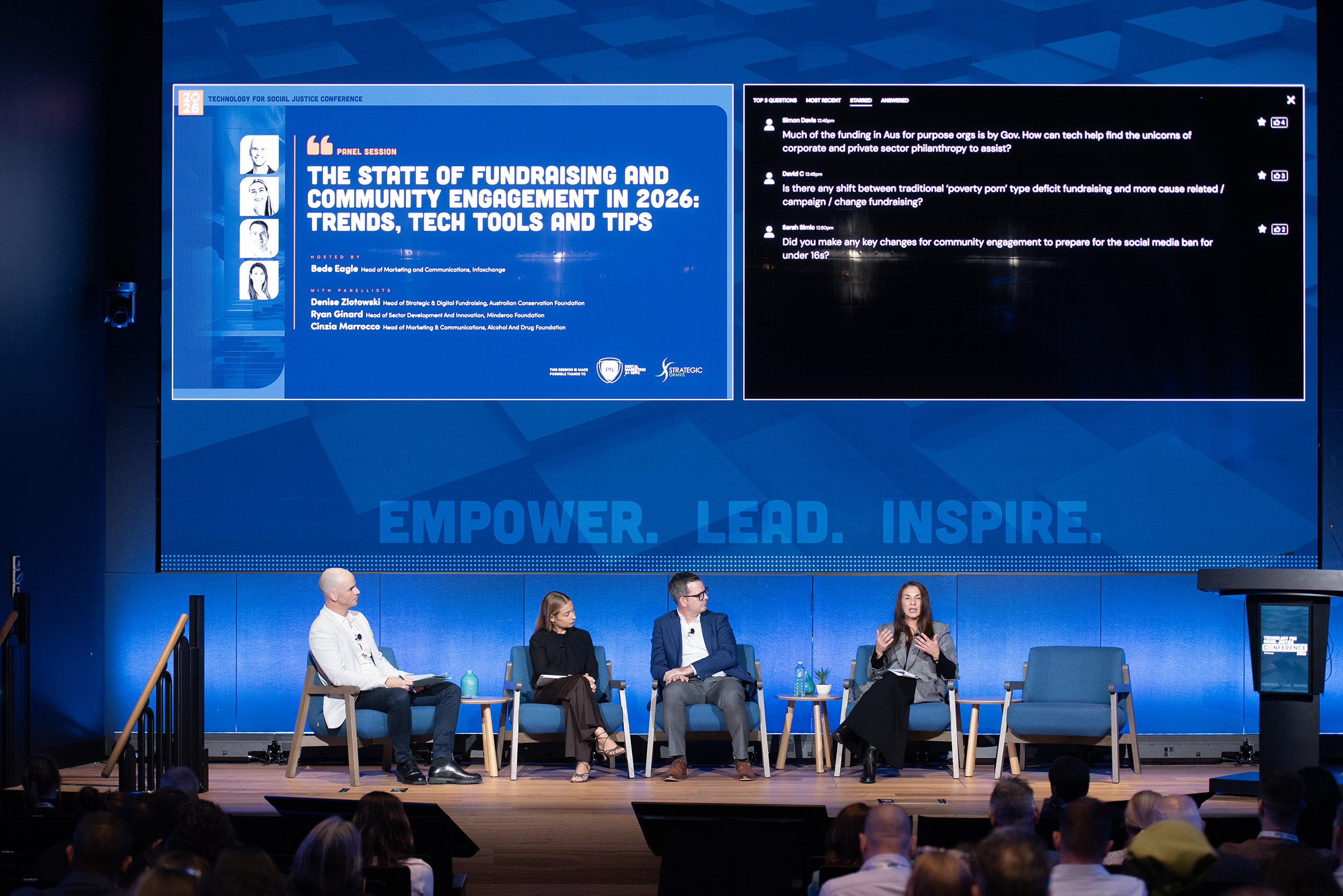
Bede Eagle of Infoxchange, Australian Conservation Foundation’s Denise Zlotowski, Minderoo Foundation’s Ryan Ginard and the Alcohol and Drug Foundation’s Cinzia Marrocco discussed trends, tools and opportunities for growth and fundraising in 2026. Ryan Ginard from Minderoo Foundation encouraged organisations to ask for the operational infrastructure they need:
“What we should do is encourage organisations to make an ask in terms of operations. Money for tech. We need money to build up a CRM. Money for platforms that help us raise more dollars.”
“It’s really instilling confidence in the sector to make those asks of their funding partners. I think lots of foundations are on board, it’s just having the courage to make those asks. It’ll change pretty quickly where we start talking about our successes like this.”
Digital inclusion remained a major thread throughout the conference. In a lightning talk, Dane Glerum from Good Things Australia and Hiba Ayass from Whittlesea Community Connections shared the Digital Sisters program and its work supporting migrant and refugee women to be digitally empowered.
“So many systems rely on online platforms, long-form and written communication, but that doesn't reflect how people actually access information or make decisions in their daily life.”
“When communication doesn't match people's reality, people get left behind. And when people get left behind, systems start to fail.”
The panel Ensuring Digital Inclusion for All Australians explored digital access as essential infrastructure. Suzie Riddell from The Smith Family shared, “we want to take digital inclusion from being seen as an individual or a household responsibility, to being seen as essential infrastructure.”
Johanna Weaver from the Tech Policy Design Institute connected digital inclusion with trust in AI, noting that just 1% of Australians feel artificial intelligence is being used responsibly. “Why does that matter when it comes to digital inclusion? Because if we're not increasing trust, the people who will continue to be excluded, will be the people who are already digitally excluded. If we don't address this trust deficit that Australians have, we're not actually going to be able to ensure the benefits of artificial intelligence are actually widely distributed.”
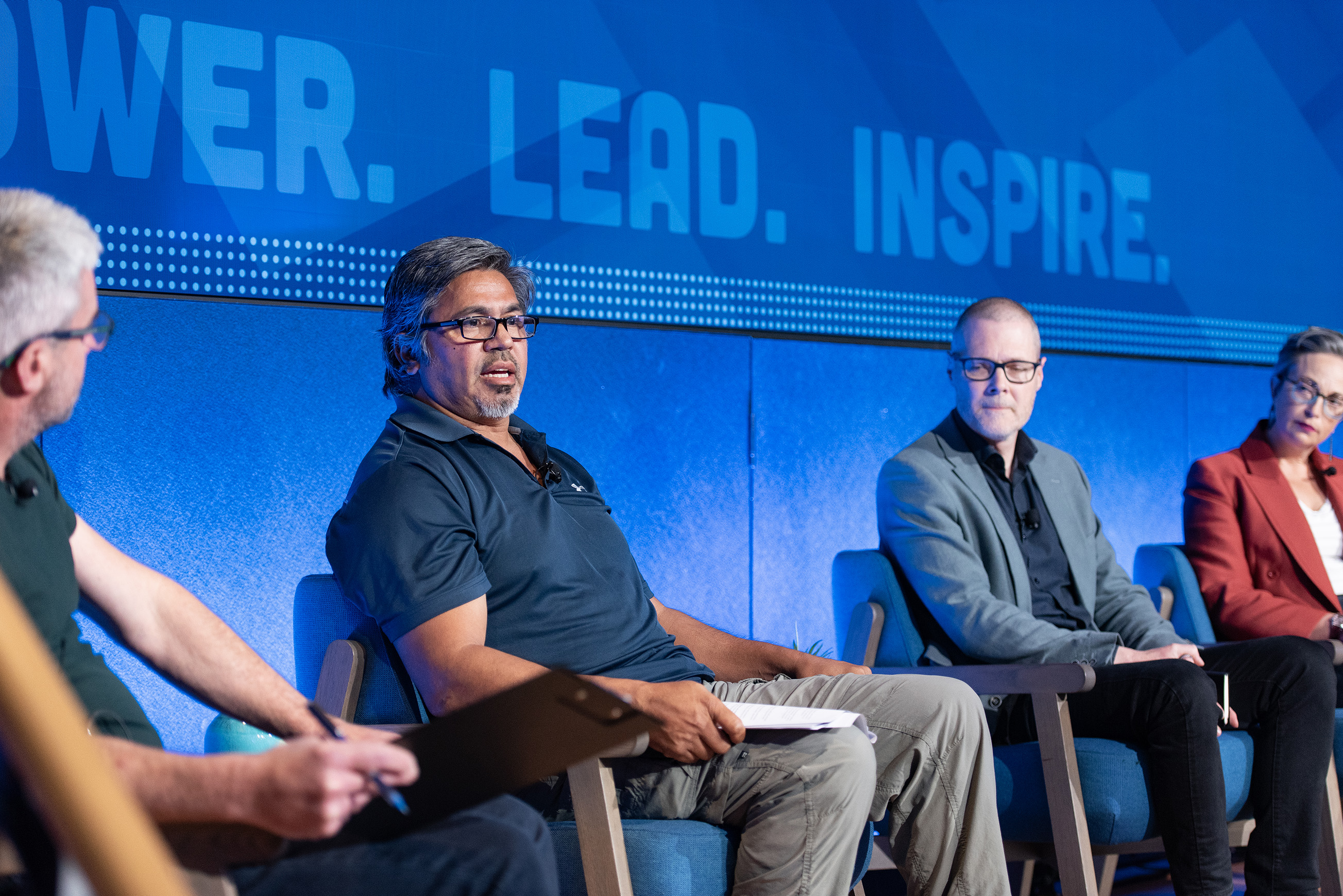
Che Cockatoo-Collins from the First Nations Digital Inclusion Advisory Group reminded attendees that genuine inclusion requires time, patience and community-led approaches.
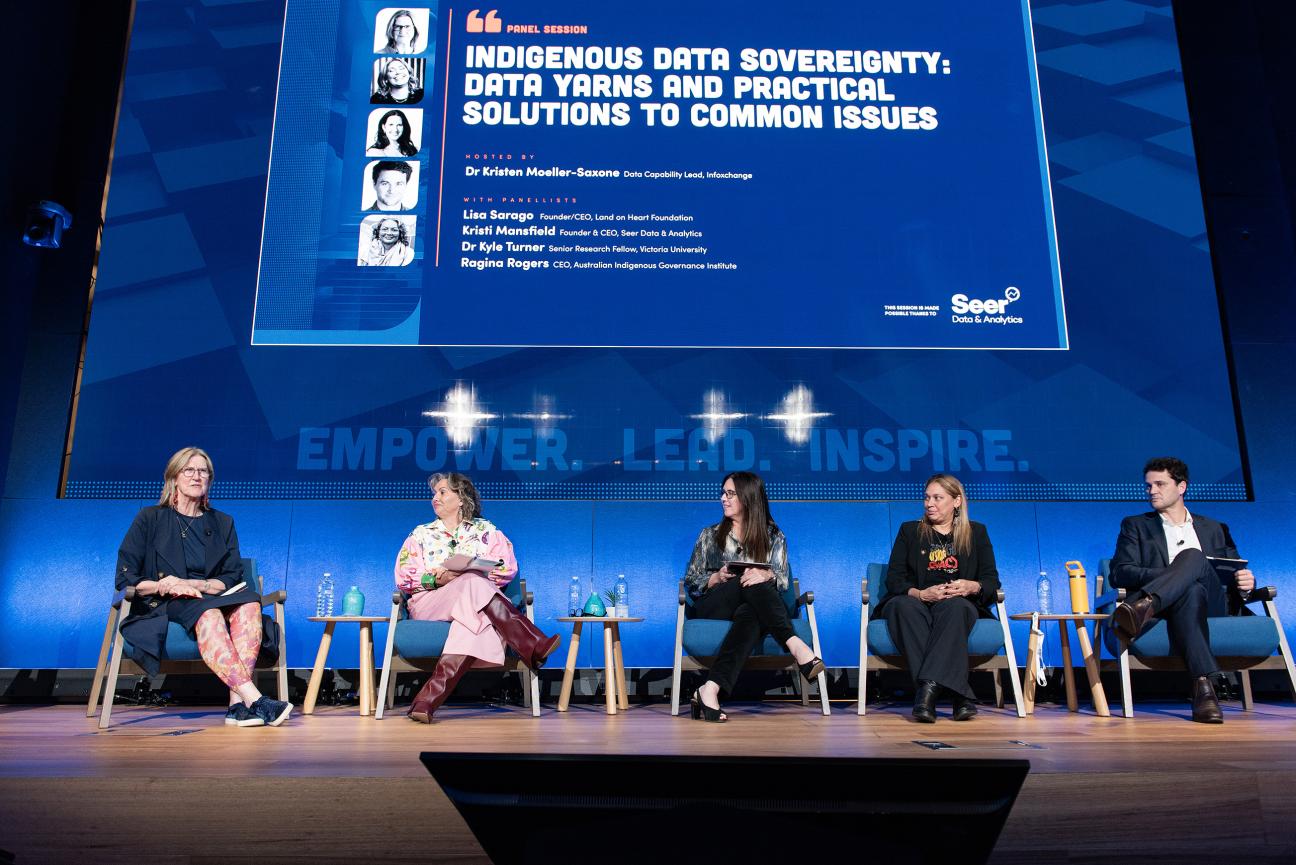
The panel Indigenous Data Sovereignty: Data Yarns and Practical Solutions to Common Issues further explored cultural authority, data governance and self-determination. Speakers included Dr Kristen Moeller-Saxone, Lisa Sarago, Kristi Mansfield, Dr Kyle Turner and Ragina Rogers.
Lisa Sarago from Land on Heart Foundation spoke about building “a data analytics army” across Australia to support Indigenous Australians to use data to tell their story in a positive way.
“We want a strength-based approach and that's how we're going to be able to achieve our self-determination when we actually have control.”
Ragina Rogers from the Australian Indigenous Governance Institute highlighted the importance of accountability and community understanding in data collection.
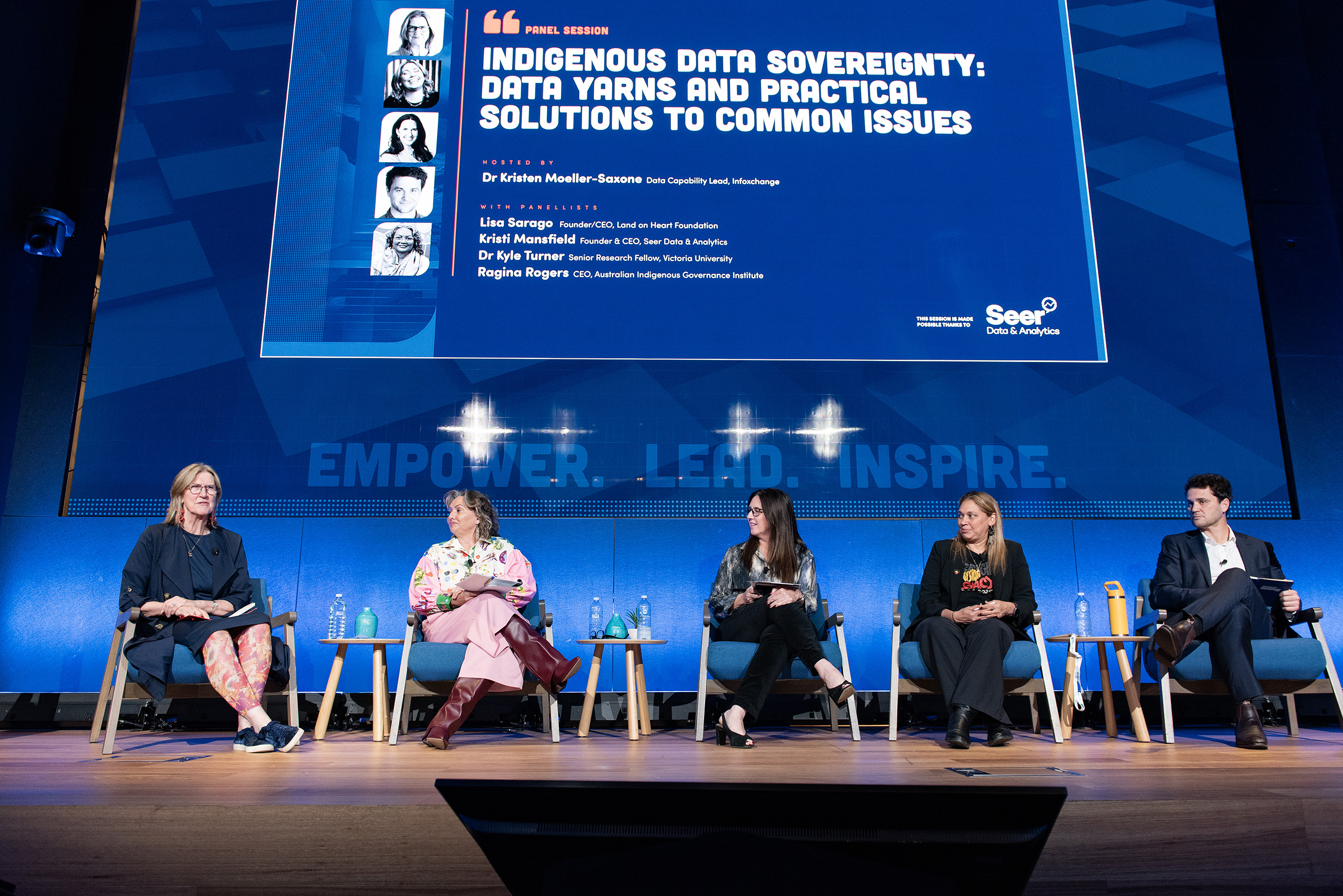
“Data collection is a crucial point. How are you collecting it? Why are you collecting the information? And are communities aware of the why? Understanding that our board rooms aren’t necessarily a table with 10 chairs around it. It’s the shade under the tree on the riverbank.”
She added:
“This is an amazing opportunity in regards to cultural authority, cultural governance, Indigenous data sovereignty. It’s an acknowledgement that everyone, as a nation, as a community, as mob as all of us, are taking that big leap with self-determination.“
The 2026 Australian NFP Technology Awards Celebrated Resilience and Innovation
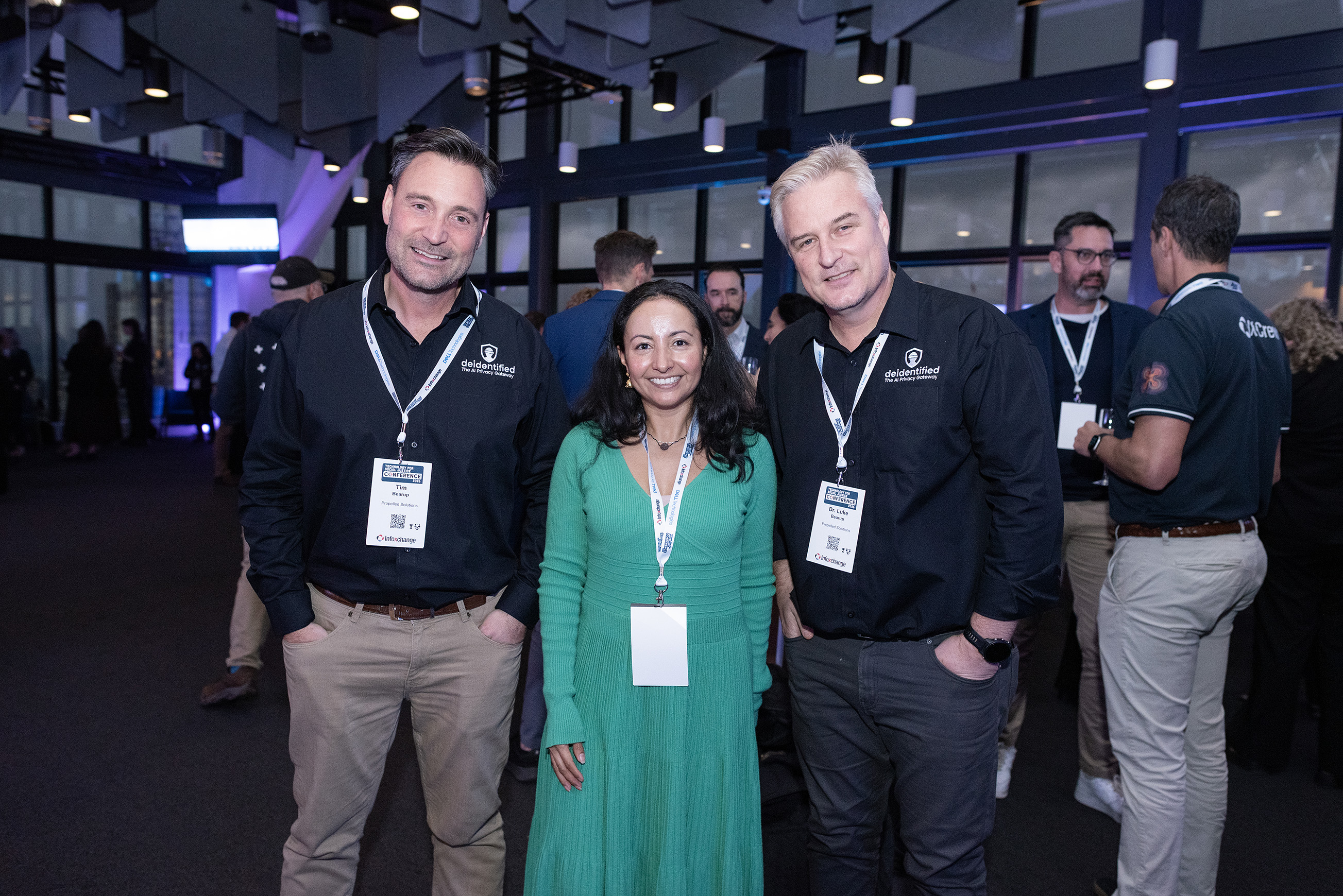
The Australian NFP Technology Awards brought the sector together to celebrate the organisations and individuals using technology innovation to strengthen impact across the not-for-profit and broader community sector.
ADHD Foundation was named Not-for-profit Technology Innovator of the Year for transforming a single contact centre phone line into a national mental health support service using integrated digital systems. Uniting NSW.ACT received the award for Best Use of AI for Community Impact for Buddy, its AI assistant designed alongside frontline care workers to reduce administrative burden and improve service delivery.
Good360 Australia won Best Use of Data for Community Impact for its use of real-time retailer and sector data to redirect surplus goods into life-changing support for communities, while Vital Projex / VitalHub received Technology for Community Impact Award for its technology-enabled youth mental health intervention model supporting regional and rural communities.
Individual awards also recognised Gemma Kollios from Success Works Partners as Best Accidental IT Person and Andrew Redfern from the Society of Australian Genealogists as Technology Volunteer of the Year for their leadership in digital transformation and capability uplift.
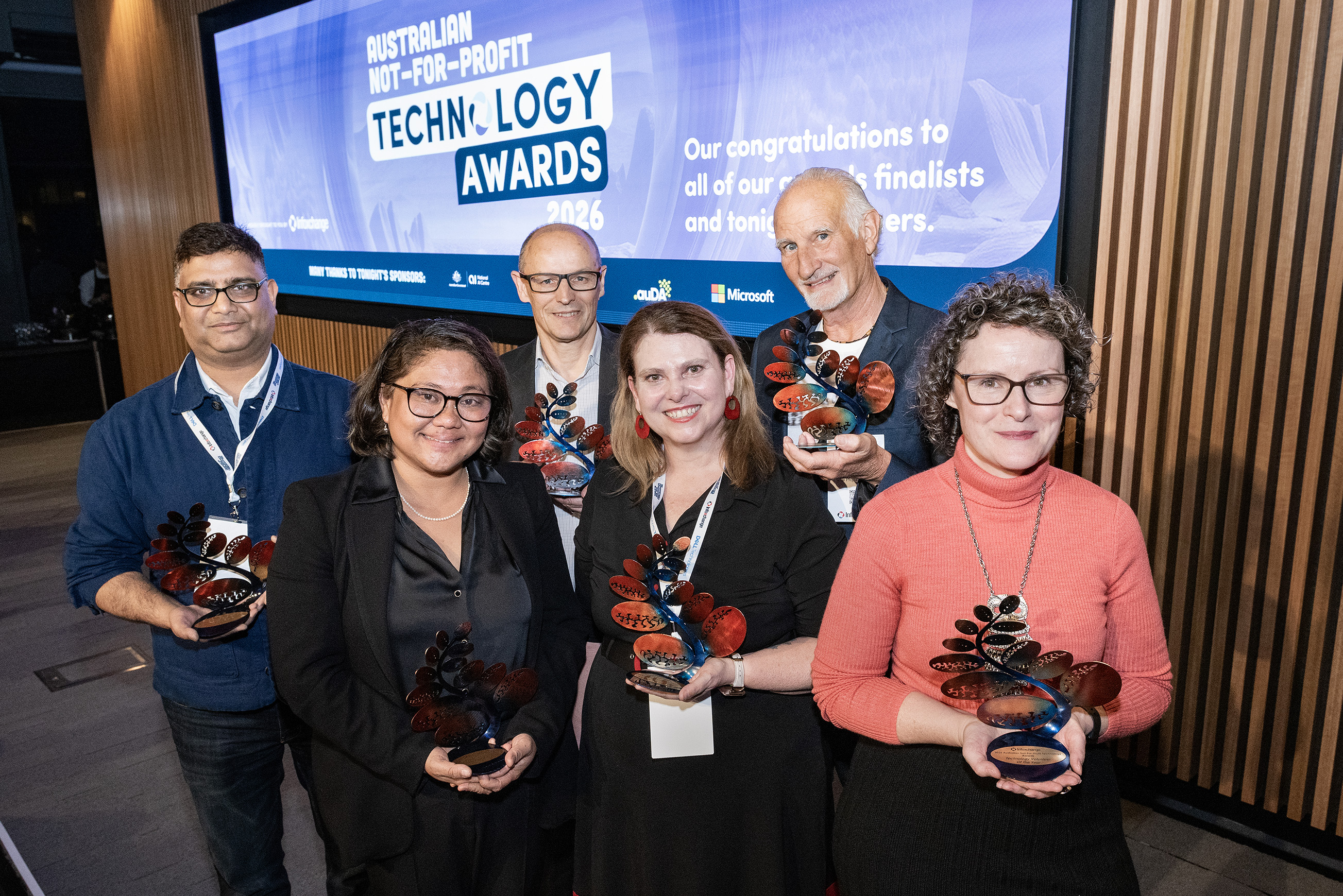
The judges noted that this year’s finalists demonstrated how the sector is not only adopting technology, but actively shaping it to better serve communities and respond to increasingly complex challenges.
Sector Experts Deliver Hands-on Workshops to Implement Innovation on Day Two
Day 2 shifted into a full program of practical workshops, helping NFPs take learnings from Day 1, turning them into use cases to take back to their organisations. Sessions covered expansive ground, from responsible AI governance to cyber-crisis simulations, to data tools for impact reporting and taking AI ideation to execution.
In AI Priorities 2026: What Leaders Need to Know, Kyle Behrend and Matt Lawrence from Infoxchange explored what responsible AI adoption looks like using Australia’s National AI Centre six-practice governance framework, discussing rogue volunteer chatbots and privacy risks, to providing insights on practical governance that leaders can act on immediately.
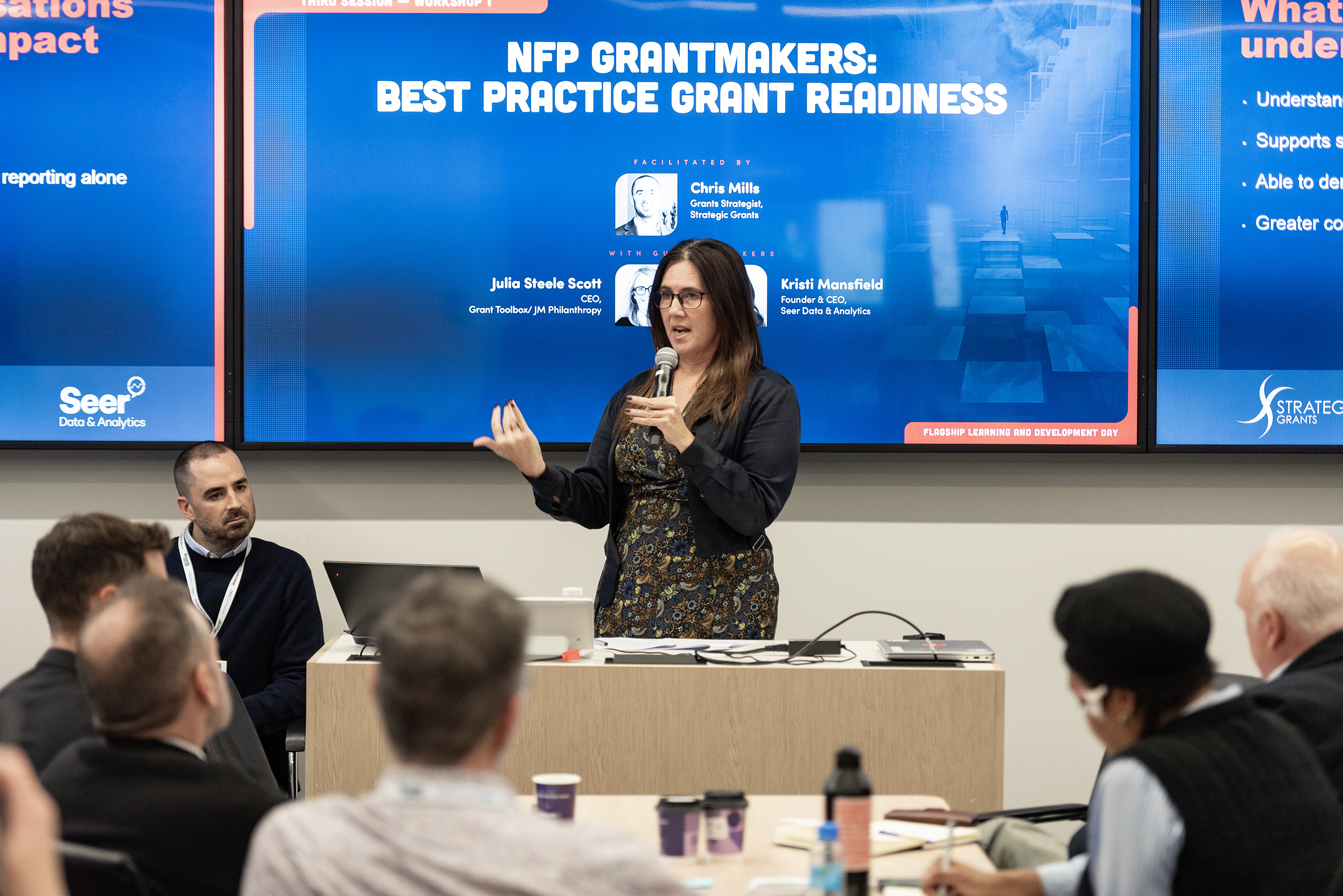
In NFP Grantmakers: Best Practice Grant Readiness, Julia Steele Scott noted the importance of coherence from a funder’s perspective. “The biggest thing that will build trust is that there is coherence in the application. Consistency builds confidence."
Kristi Mansfield from Seer Data & Analytics also highlighted the role of trusted data in communicating impact:
“For funders, we are helping them collect baseline data as well as short, medium and long term data as it aligns to the theory of change. We can see how outcomes are improving for their not-for-profit partners beyond the baseline.”
The Designing with People: Ways to Embed Lived Experience for Community-Centred Technology and Digital Services workshop explored why inclusive, human-centred design matters. Led by Katherine Burnard, Abdurrehman Nadeem, Alana Faust and Steph Thow of Health Voices Victoria, the session highlighted that 43% of Australians have below-proficient literacy, 28% of Victorians were born overseas, and one in five Australians lives with disability. Through interactive exercises, attendees explored how lived experience, accessibility and inclusive design can lead to better technology outcomes for communities.
Other Day 2 workshops explored data visibility, AI opportunities for under-resourced teams, 10x-ing your output and preparing for an agentic workforce.
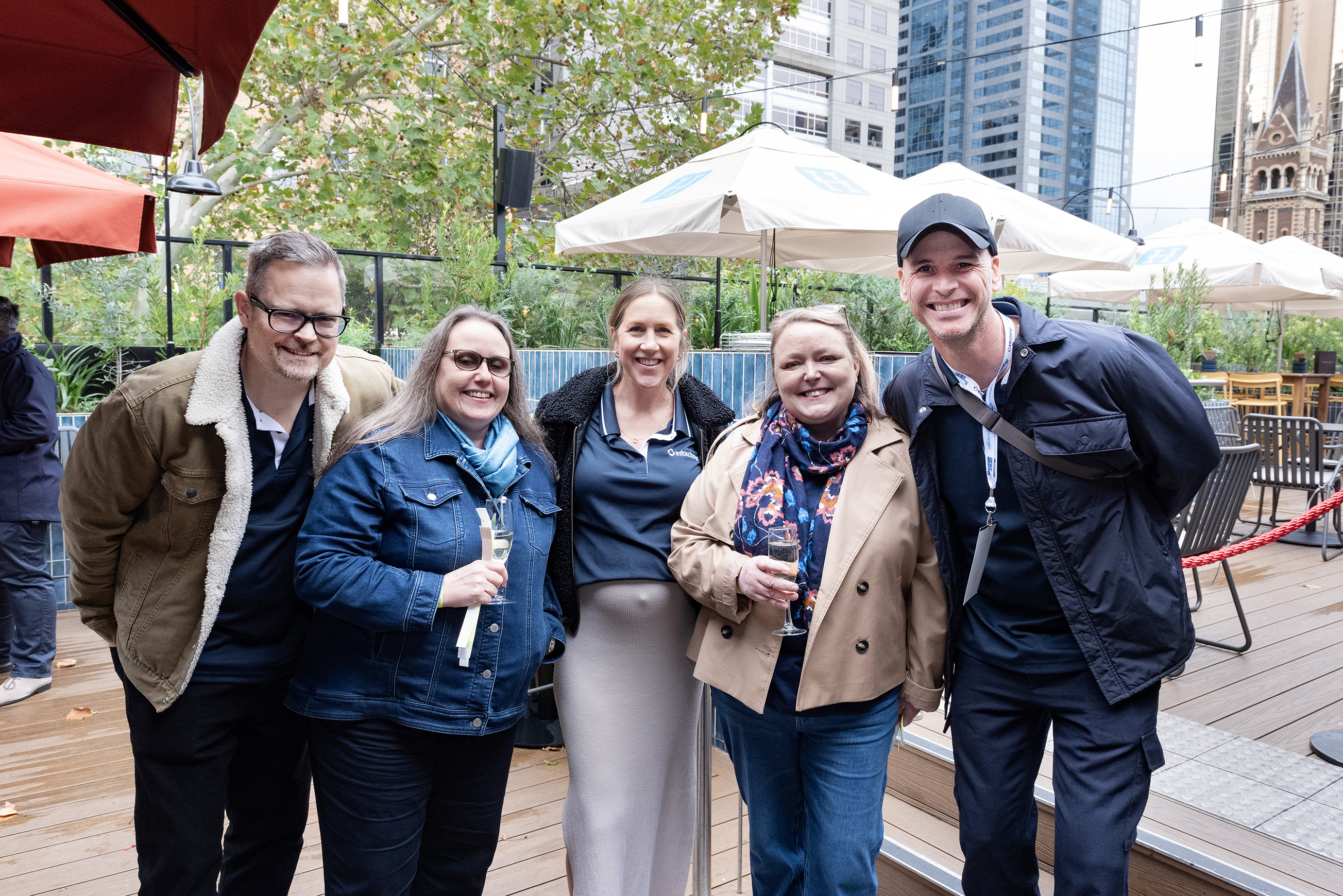
Attendees and partners then gathered together at the Hicken’s Hotel for an evening where many extended beyond the designated hours to relax, celebrate and network!
The final day of the conference focused on hands-on technology demonstrations from Atlassian, Adobe and Microsoft, giving attendees practical exposure to work management tools, AI-enabled workflows, creative platforms and agentic AI.
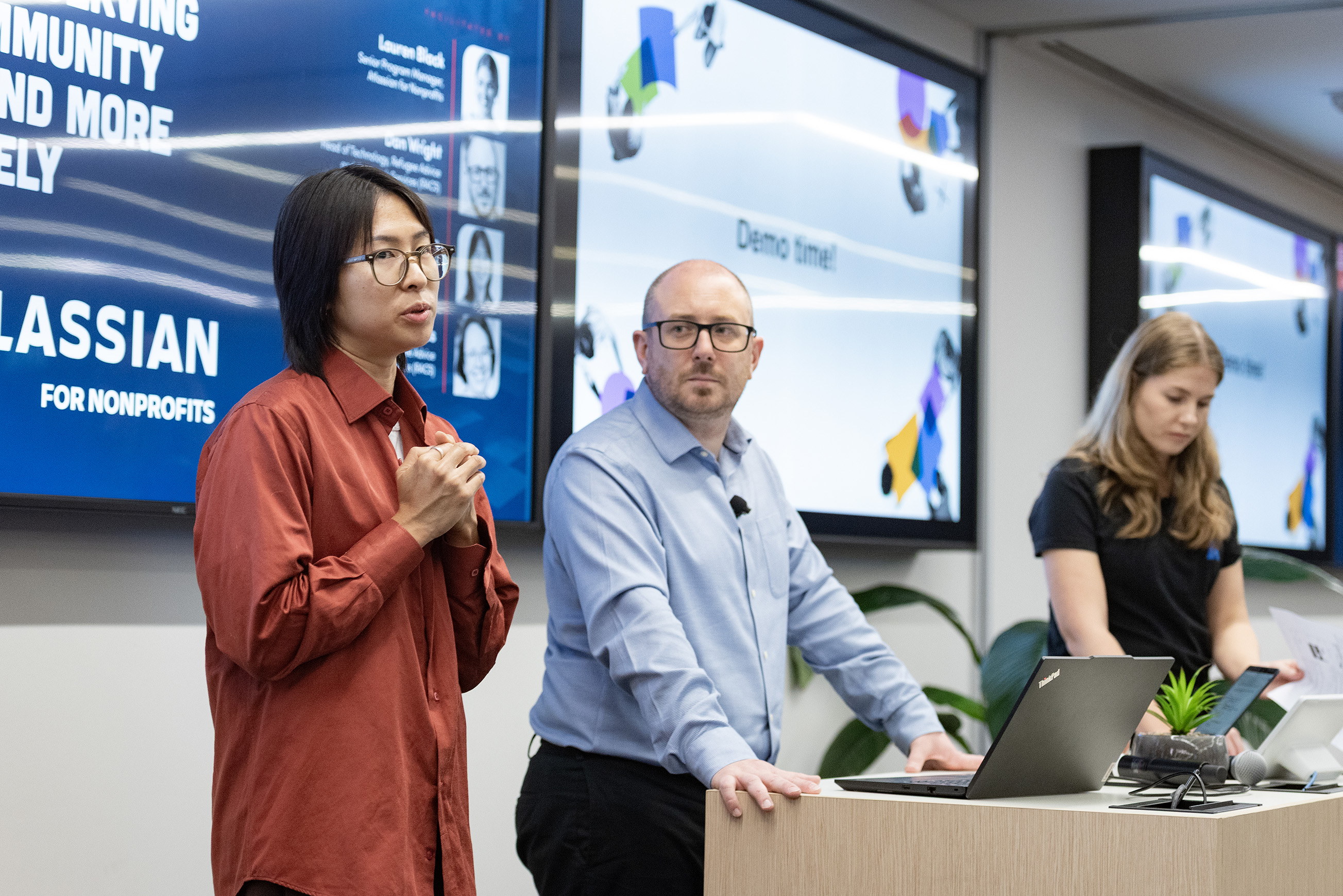
In Atlassian’s session, Louisa Luong and Dan Wright from Refugee Advice and Casework Services (RACS) explored how agentic AI tools such as Rovo can be embedded into workflows, sharing how they are using the free Atlassian for Nonprofits service to create a single source of truth, capture meeting notes securely and training centrally.
As Lauren Black from Atlassian Foundation put it: “agents are useful when they're built into clear workflows.”
Adobe’s session with Rosie Sue showcased the latest innovations in Creative Cloud and the all-new Acrobat Studio, including discussions on ethical AI-generated content, trained only on what they hold rights to, and practical creative workflows for not-for-profits.
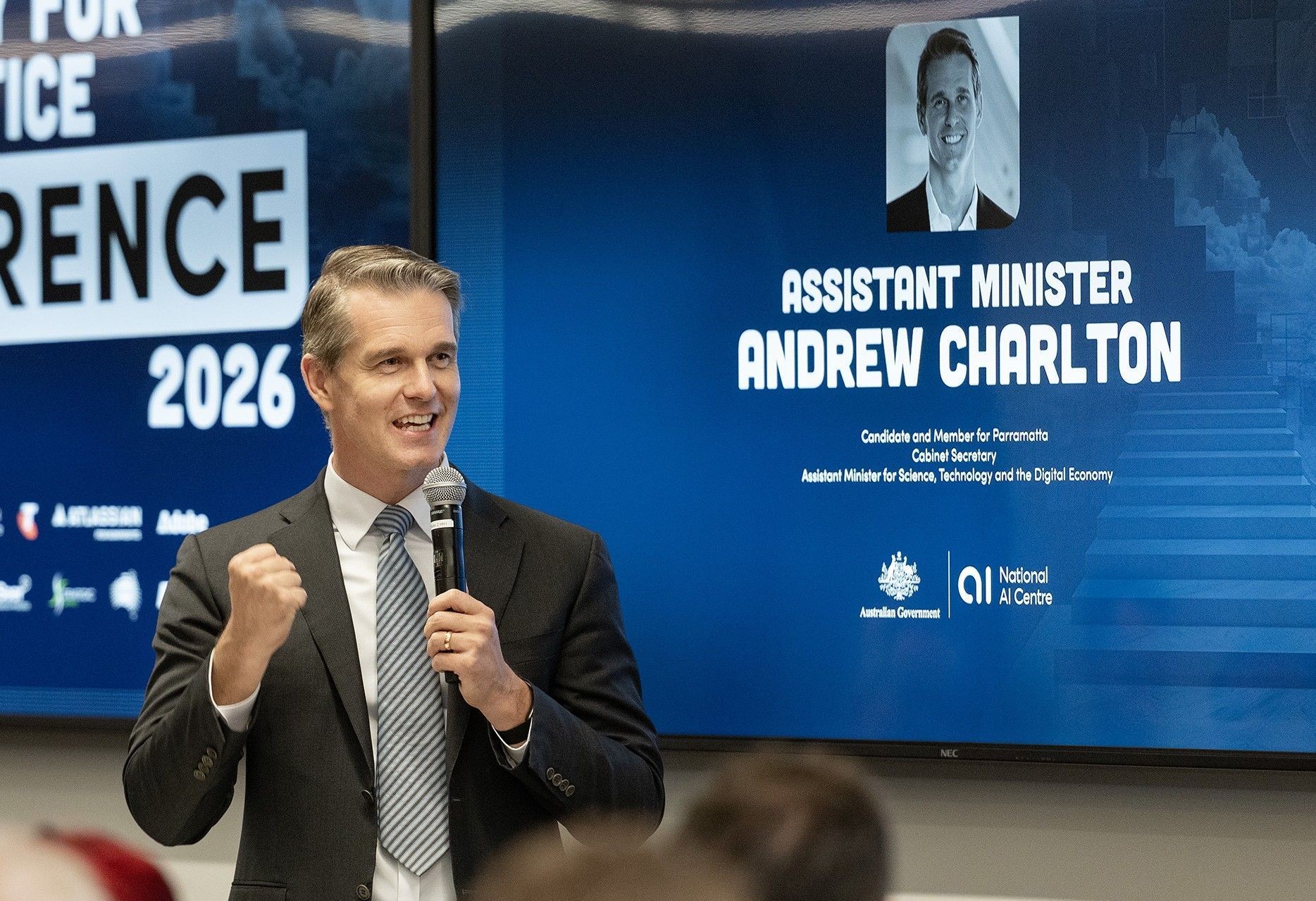
In the middle of Friday’s sessions, we were joined by Assistant Minister of Science, Technology and the Digital Economy, Andrew Charlton, who shared his inspiration and excitement that our cohort are leading the way on responsible AI, and the government’s keenness to hear more stories of the innovations of impact.
Following this, Microsoft led an interactive session on embedding AI agents into team workflows, demonstrating how an NFP can build a human-centred agent workflow in Copilot to assess grant opportunities efficiently. Finally, Infoxchange’s Digital Transformation Team led a conference wrap-up with next steps, to solidify learnings and inspire NFPs to take the next action needed for rapid impact.
Across the three days, the conference showed a sector moving beyond abstract technology conversations and into practical, values-led action. From the launch of NFP Digital Futures to conversations on AI governance, digital inclusion, cyber security, Indigenous data sovereignty, fundraising, service design and productivity tools, the 2026 Technology for Social Justice Conference made one thing clear: the future of the sector will depend on shared capability, intentional collaboration and the courage to shape technology before it shapes us.
Watch: David Spriggs on embracing the possibilities of technologies
In a recent interview with the Institute of Community Directors, Infoxchange CEO David Spriggs discussed how technology and AI are creating new opportunities for not-for-profits to increase their impact.
Connect with Infoxchange's experts and resources hubs
-
To keep in the loop about our programs and receive updates on resources, initiatives, news and more, sign up to our newsletters here: Subscribe to newsletters | Infoxchange (AU).
-
To learn about our Digital Transformation Hub full of free guides, resources and 1:1 support, visit: Digital Transformation Hub.
-
To join our free AI Not-for-Profit Learning Community and access free tailored consulting, peer forums, self-paced learning, AI Readiness Tool tests and more, visit Asia-Pacific AI Nonprofit Learning Community.
-
To join us at our next free AI Learning Community Webinar, "Using AI Ethically and Responsibly" on 19 May, join here.
-
To join us at the next cyber security webinar, "Board-Ready Cyber Governance for NFPs" on 19 May with PwC, join here.
-
To join the Data Catalyst Network, a free network of NFPs building data capability via webinars, online guides and resources, join here: Welcome | Data Catalyst Network.
-
The full list of upcoming webinars is accessible via the AI Learning Community. You need a free account to register for webinars and access resources.
-
To learn about our IT Services, CCM platform and our other offerings, visit our Products and Services homepage here.
-
To access special discounts on refurbished hardware and low-price software, visit Connecting Up here: Connecting Up | Powered by Infoxchange.